
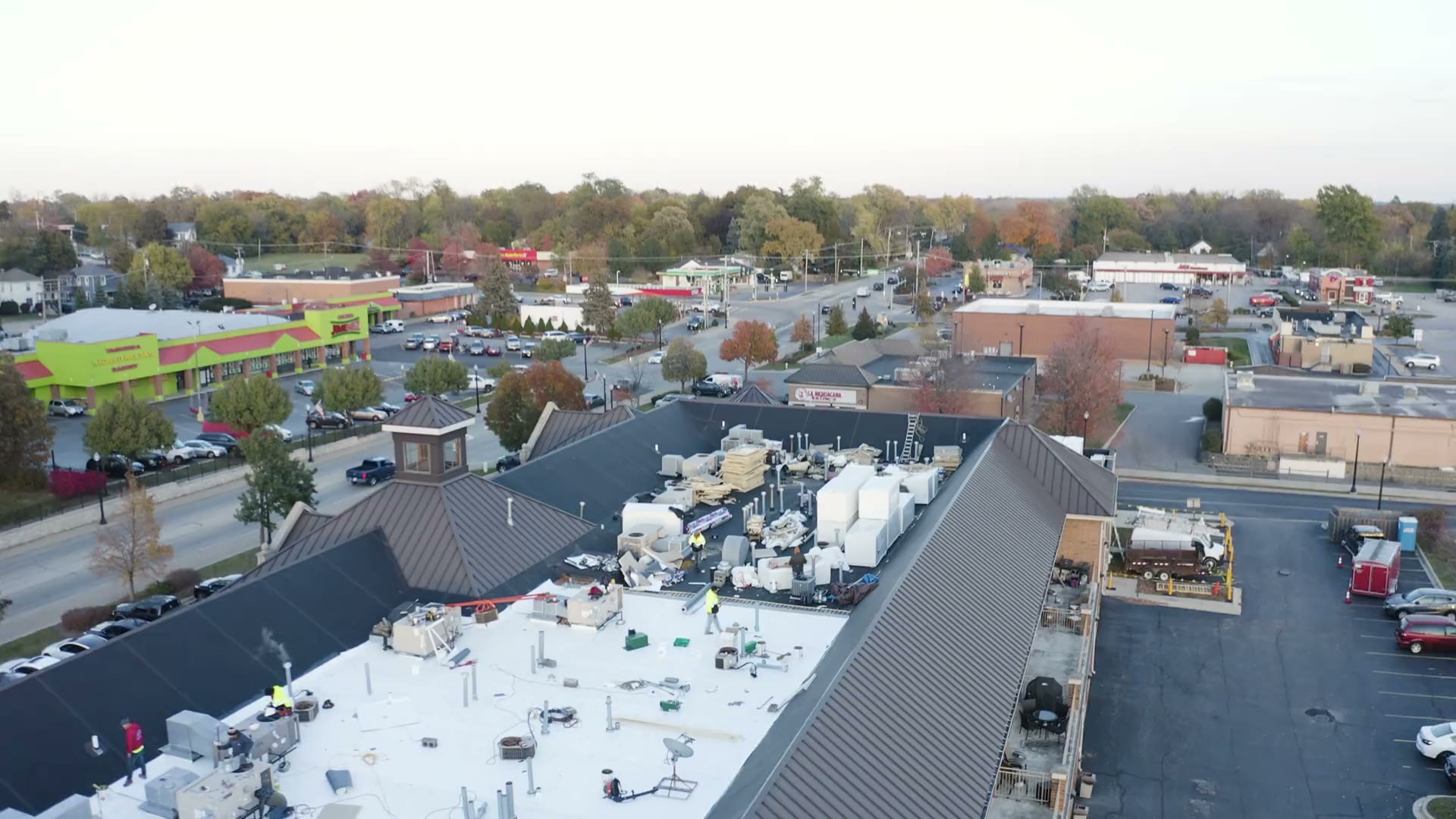
Fall Commercial Roof Maintenance: A Pre-Winter Checklist for St. Louis Building Owners
· 6 min read
Most commercial roof problems in St. Louis do not start in January. They start in the fall, with a drain half covered in leaves, a seam an HVAC tech stepped on in August, or a flashing that has been pulling loose since the last big storm. Winter just finds them. For building owners and property managers, a fall roof visit is one of the least expensive ways to avoid an emergency call when the weather is at its worst.
Here is the checklist we use on low-slope roofs before winter, why each item matters, and how a documented maintenance program turns one visit into a plan you can budget around.
Why fall is the visit that matters most
St. Louis winters are hard on flat and low-slope roofs in specific ways. Freeze and thaw cycles work on seams and flashing. Snow and ice add weight, and when drains are partly blocked, meltwater ponds and refreezes. Leaves from the fall drop end up in drains, scuppers and gutters right before the season when drainage matters most.
That is why our Roof Asset Management (RAM) program typically includes two scheduled visits a year: one in spring, after the hardest weather, and one in fall, before it. The fall visit is about getting the roof ready to shed water for the next four months.
The pre-winter commercial roof checklist
1. Drains, scuppers and gutters
Drainage is the first thing we check and the most common thing we fix. Every drain, scupper, gutter and downspout should be cleared of leaves, debris and sediment, and strainers and drain domes should be in place. A single blocked drain on a large roof can create a pond that adds weight, stresses the membrane and finds every weak seam nearby.
2. Ponding water
We look for areas that hold water days after rain, and for the stains and debris rings that show where water sits. Ponding can point to blocked drains, sagging deck or insulation, or a drainage design that needs attention. In winter, standing water becomes ice.
3. Membrane and seams
We walk the field of the roof looking for punctures, splits, blisters, open or weak seams and worn spots. On TPO and PVC, seams are heat welded and can be probed. On EPDM, we follow seams and lap edges. Small defects are cheap to repair in October and expensive once water gets into the insulation.
4. Flashings, penetrations and terminations
Most commercial leaks start where the roof is interrupted: pipe penetrations, curbs, parapet walls, edge metal and termination bars. We check for flashing that has pulled away, sealant that has dried and cracked, and fasteners that have backed out.
5. Rooftop equipment and traffic areas
HVAC units, exhaust fans and the paths service techs walk to reach them take a beating. Dropped screws, cut membrane and loose access panels are common finds. Walkway protection and reinforced equipment details help, and so does checking these areas after every busy service season.
6. Previous repairs and known problem areas
Every roof has a history. We revisit past leak locations and earlier repairs to confirm they are still holding, and we note any deficiency that keeps coming back, since that often signals a bigger issue.
7. Inside the building
The roof is only half the story. Ceiling stains, damp insulation, rust on deck or joists and complaints from tenants all help locate problems that are not obvious from above.
Signs your building should not wait for a scheduled visit
Some findings call for an inspection now rather than at the next planned visit. Call sooner if you notice any of these:
- New ceiling tile stains, drips or wet insulation after a rain
- Water standing on the roof two or more days after rain
- Blistered, wrinkled or loose membrane, especially near edges and curbs
- Edge metal or coping that has lifted after a windy day
- Recent rooftop work by HVAC, electrical or telecom contractors
- A musty smell or rust spots on deck or joists inside
Each of these is a sign water may already be getting into the assembly, and every week of rain makes the repair larger.
Turn the visit into a record, not just a repair
The difference between a roof that is maintained and a roof that is managed is documentation. A one-time repair fixes today's leak. A documented roof record lets you see where the roof is heading and plan for it.
Every RAM cycle updates the roof record with:
- Inspection photographs and the current roof condition
- Identified deficiencies, sorted by urgency
- Completed maintenance and repairs
- Areas that need continued monitoring
- Estimated remaining service life
- A 3 to 5 year capital roadmap for repair, restoration and eventual replacement
That last item matters this time of year. Many owners and managers set next year's capital budget in November and December. A current roof record means the roof line in the budget is based on condition, not a guess.
"We had a leak in the shingles at our business and Made Roofing was outstanding from start to finish. They came out right away, quickly identified the issue, and were able to fix it."julia rizzo, Google review
When winter weather does hit
Even a well-maintained roof can be damaged by hail, high winds, heavy snow or ice. RAM customers have an existing condition history, which helps us evaluate a significant weather event quickly, document new findings early and separate storm damage from existing wear. RAM customers also get priority leak and emergency support when unexpected problems occur.
What a custom maintenance plan covers
No two commercial roofs are alike, so no two plans should be either. A RAM plan is matched to the roof's system type, size, age, condition, exposure, occupancy, drainage, rooftop equipment, warranty requirements and your ownership goals. It can include scheduled inspections, preventative maintenance, minor repairs, drainage and debris maintenance, flashing maintenance, leak monitoring, storm inspections and condition documentation.
Schedule your fall roof assessment
If your building has not had a roof inspection since spring, now is the time, before leaves, ice and snow start testing the drainage. We work with owners and property managers across the St. Louis metro, from Clayton, Maryland Heights and Chesterfield to St. Charles, St. Peters and O'Fallon. Weekday inquiries get a same-day response.
Ready when your roof is
Ready to get your commercial roof ready for winter? Call (314) 912-4911 or start at maderoofing.com.
Frequently asked questions
How often should a commercial roof be inspected?
Most commercial roofs benefit from two scheduled inspections a year, in spring and fall, plus an inspection after any major hail, wind or snow event. That rhythm catches small problems before they become leaks.
What is included in a fall commercial roof inspection?
A fall inspection covers drains, scuppers and gutters, ponding areas, the membrane and seams, flashings and penetrations, rooftop equipment and traffic areas, past repairs and any interior signs of leaks, all documented with photos.
What is MADE's RAM program?
RAM is MADE's Roof Asset Management program: a custom maintenance and planning program for commercial roofs. It combines scheduled inspections, preventative maintenance, documentation and a 3 to 5 year capital roadmap.
Can you plan roofs across several buildings?
Yes. Condition records and priority planning can be organized across multiple facilities to support maintenance and capital budgeting.