
What Drives the Cost of a Commercial Roof Replacement? A St. Louis Guide for 2027 Budgets
· 6 min read
November and December are budget season for a lot of St. Louis building owners and property managers. If a roof replacement is on the horizon, the hardest part is often putting a defensible number in the capital plan. Commercial roof quotes are notoriously hard to compare, because two bids for "a new roof" on the same building can describe very different assemblies.
We do not publish per-square-foot prices, because a commercial roof is not a commodity. What we can do is explain what actually drives the cost, so the number you budget for 2027 reflects the roof you will really need.
1. Size, shape and complexity
Square footage is the starting point, but shape matters almost as much. A simple rectangle with a few penetrations is a very different job from a roof with multiple levels, parapet walls, expansion joints and dozens of curbs and pipes. Every transition is detail work, and detail work is where labor goes and where leaks start if it is rushed.
2. The roof system you choose
Each low-slope system has strengths, and the right one depends on the building, not on what a contractor happens to install most.
| System | What it is | Often chosen for |
|---|---|---|
| TPO | Reinforced single-ply membrane with hot-air welded seams and a reflective surface | Efficient low-slope buildings, warehouses, offices and retail |
| EPDM | Durable rubber membrane with a long performance record | Low-slope roofs where a proven, repairable membrane is the priority |
| PVC | Chemical-resistant welded membrane | Restaurants and facilities with grease, chemicals or demanding rooftops |
| Modified bitumen and built-up | Layered asphalt systems | Robust, serviceable assemblies and high-traffic roofs |
| Metal | Standing-seam and structural metal panels | Long-term performance on buildings designed for metal |
Within each system, membrane thickness, attachment method and accessories also change the price.
3. Tear-off or recover
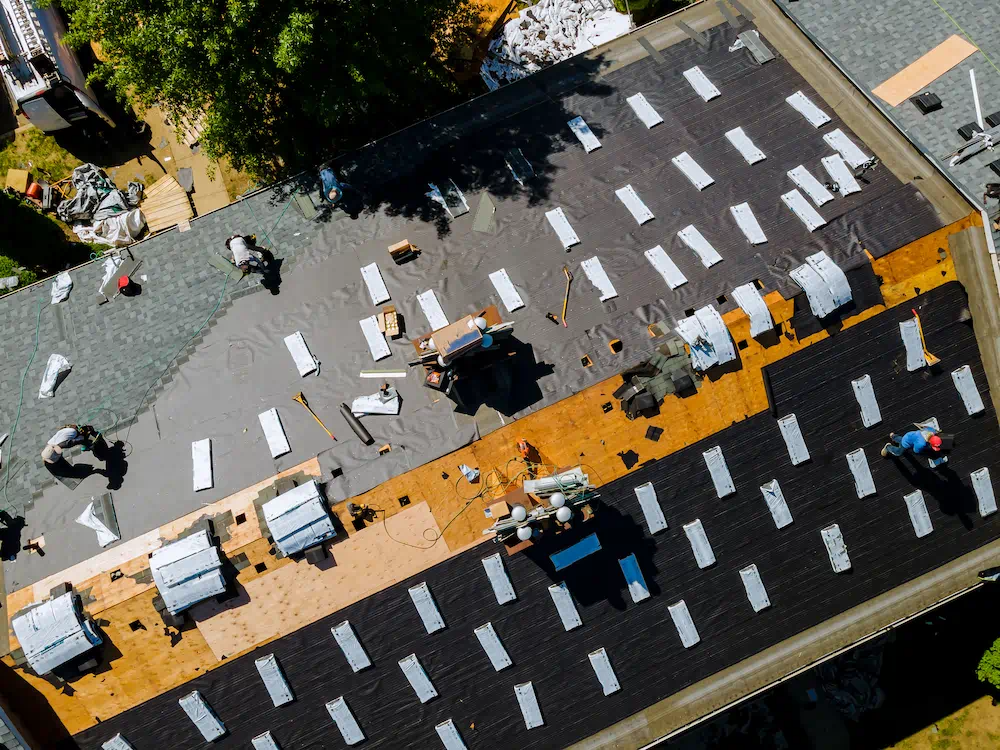
Removing the existing roof down to the deck adds labor and disposal cost. A recover, where a new membrane goes over the existing roof, can cost less when the deck is sound and the insulation is dry. Building codes limit how many roof layers a building can have, and a recover over wet insulation simply traps the problem. We confirm deck, moisture, drainage and attachment requirements before selecting an assembly.
4. What is under the membrane
The membrane is the part you see, but much of the cost and long-term performance is underneath it:
- Deck condition. Rusted metal deck or damaged wood or concrete must be repaired before anything goes on top.
- Wet insulation. Saturated insulation has to come out. Moisture surveys during the assessment help size this before the job, not during it.
- Insulation and cover board. The type and thickness of insulation, and whether a cover board is added for durability, affect both cost and energy performance.
- Tapered insulation. Redesigning slope to move water to the drains costs more up front and can solve chronic ponding for the life of the roof.
5. Drainage, flashing and edges
Drains, scuppers, gutters, edge metal, parapet caps and termination details are often where older roofs failed. Reworking them adds cost, and it is usually money well spent. A new membrane connected to old, failing details is not a new roof.
6. Rooftop equipment
HVAC units, exhaust fans, solar arrays and other equipment add curbs and penetrations to flash. Some equipment has to be lifted or disconnected during the work, which may involve your mechanical contractor. Heavy service traffic is also a reason to budget for walkway protection and reinforced details.
7. Access, staging and keeping the building open
Crane access, staging space, building height and site logistics all affect cost. So does the need to keep operations running below. We phase installs around operating hours and provide daily site reporting, so tenants, customers and production lines are disrupted as little as possible. Phasing takes planning, and it should be in the bid from the start.
8. Warranty level
Manufacturer system warranties come in different lengths and levels, and the higher tiers often require specific materials, inspections and certified installers. Our manufacturer-certified crews keep 20 to 30 year system warranties enforceable. When you compare bids, compare the warranty being offered, not just the price.
9. Energy goals
Reflective membranes, added insulation and solar-ready detailing can lower operating costs over the life of the roof. These choices change the up-front number, so it helps to decide early how much energy performance matters for your building and ownership horizon.
Before you compare bids: make sure each one specifies the same membrane and thickness, insulation and cover board, tear-off or recover, drainage and edge work, equipment handling, phasing and warranty. Otherwise you are comparing different roofs.Why the lowest bid can cost more
A low number often means something was left out: less insulation, no cover board, existing edge metal reused, wet insulation not accounted for, or no allowance for deck repair. Those gaps tend to show up as change orders once the old roof is open, or as leaks a few years later. Ask every bidder how they will handle unknowns like wet insulation and deck damage, and how those items will be priced if they are found. A detailed, documented scope up front is the best protection against surprises in the middle of a project.
Replace now, restore, or plan for later?
Not every aging roof needs to be replaced next year. Depending on condition, a restoration or targeted repairs can carry a roof for a while, letting you schedule replacement when it fits the budget. Our Roof Asset Management program turns inspection history and remaining service life into a 3 to 5 year capital roadmap, so a replacement becomes a planned project instead of an emergency.
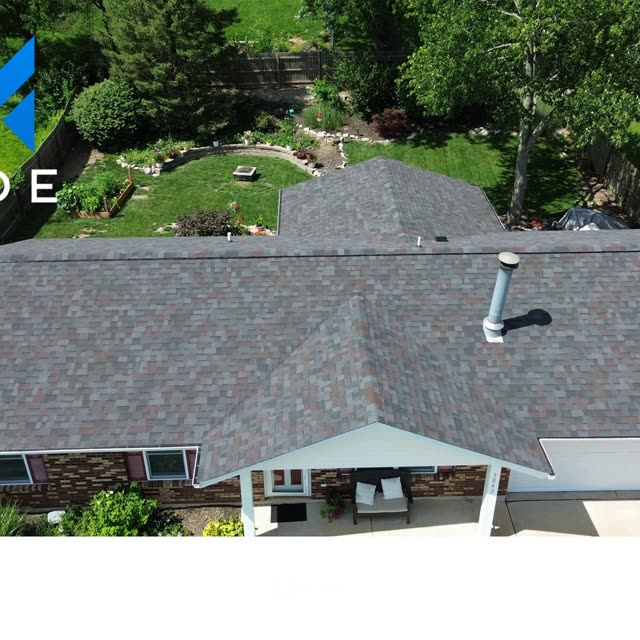
"Connor and his crew were extremely informative and executed my clients roof repair so we can continue with the kitchen renovations my clients and I were very impressed! Looking forward to doing more business with Connor and his team!"Chris Visico, Google review
Get a number you can budget around
Every MADE engagement starts the same way: a documented assessment, a written scope and a plan you can hold us to. If a commercial roof replacement is on your 2027 list, call us now so your budget reflects your actual roof. We serve building owners and property managers across the St. Louis metro, within 40 miles of Green Park.
Ready when your roof is
Planning a commercial roof for 2027? Call (314) 912-4911 or start at maderoofing.com.
Frequently asked questions
What affects the cost of a commercial roof replacement?
The biggest factors are roof size and complexity, the system chosen, tear-off versus recover, deck and insulation condition, drainage and edge work, rooftop equipment, access and phasing, and the warranty level.
Is TPO, EPDM or PVC the best commercial roof?
It depends on the building. TPO offers welded seams and a reflective surface, EPDM is a proven rubber membrane, and PVC resists chemicals and grease. We match the system to the building's drainage, traffic, use and goals.
Can a new commercial roof go over the old one?
Sometimes. A recover can work when the deck is sound and the insulation is dry, and when codes allow another layer. Wet insulation or deck damage means a tear-off is needed.
Can work be phased around business operations?
Yes. We phase installs around operating hours and provide daily site reporting to keep disruption low.